Stamped concrete: what it is, advantages, moulds, colours and prices
The popularity of stamped concrete is no coincidence. Its countless advantages make this decorative coating
one of the most widely used for all types of construction work. A construction material that is the result of
the combination of different elements: binder, aggregates, water and some additives.
The result of its mixture gives as a result stamped concrete paving and vertical walls that stand out for their
great hardness and resistance, but also for their attractiveness. A very attractive aesthetic that is given
thanks to the wide range of designs offered by the stamped concrete moulds that are stamped on the surface to be
renovated.
What is stamped concrete?
Stamped concrete is a decorative technique that consists of stamping moulds on the surface of fresh concrete
that perfectly imitate all types of materials. The patterns, textures and colours that can be obtained are
infinite.
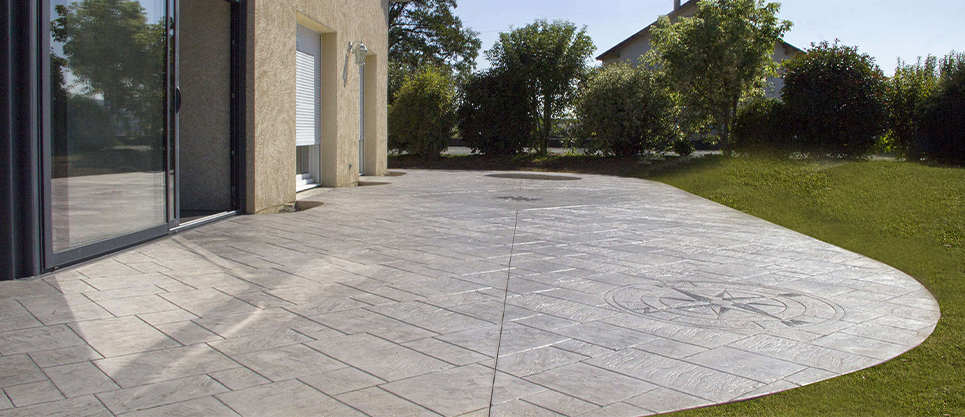
Stamped concrete, also known as printed concrete, is a continuous, low-relief paving with a pigmented surface
capable of simulating the most varied pieces and textures: cobblestones, brick, stone, slate, tiles and even
wood, among others.
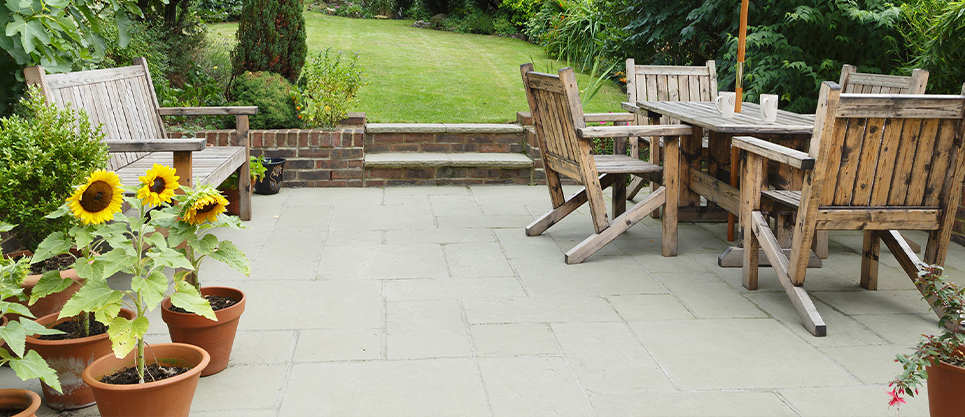
A construction material that is used especially in the field of paving pavements, terraces, parks, gardens,
garages, shopping centres, entrances to residential dwellings or around swimming pools. This is why it is known
as stamped paving, as this decorative technique is mainly used on horizontal surfaces.
The versatility of this decorative continuous paving and its durability are some of the keys to its success.
Stamped concrete can be applied on both indoor and outdoor surfaces. However, it should be noted that moulds can
also be stamped on vertical surfaces. This other technique is called vertical stamped concrete.
Advantages of stamped concrete
Stamped concrete has no limits as far as shapes and colours are concerned. A personalisation in design that not
all materials can boast. Thanks to its ability to imitate parquet, stone, brick or wood, among others, unique
projects can be created.
In addition to these advantages of the stamped concrete floor, there is also its malleability, strength and
durability. This is why it has such a wide range of applications. Garages, terraces, shopping centres, homes and
many other surfaces. Stamped concrete facades, walls and floors do not require special cleaning and maintenance.
Durability and resistance:
Stamped concrete is one of the most durable floor coverings available thanks to its high resistance to
traffic. This is why this material is so popular for covering roads, parks, garages or entrances to
residential areas. It is also a decorative covering that withstands continuous changes in temperature and
UV rays. It adapts to different weather conditions, even frost. With proper application and use, a stamped
concrete floor can last for more than 20 years.
Wide variety of finishes
Stamped concrete is highly customisable. It offers a multitude of finishes, shapes and textures depending
on the printed concrete moulds used. But also depending on the pigments chosen to colour the mould in
question. It is possible to combine several pigments to obtain even more spectacular final results. A
versatility thanks to which it is used as flooring but also as wall and façade cladding.
Quick execution
The installation of stamped concrete is quick and easy. As it is a continuous mortar, the execution times
are reduced compared to other alternatives on the market. More complex geometric shapes will require more
time.
Low maintenance
Preserving the optimum state of stamped concrete is not as demanding as other materials. It is sufficient
to wash the surface from time to time to prevent the accumulation of dirt. And renew the varnish layer
every 2 or 3 years, especially on pavements that suffer a lot of wear and tear due to vehicle traffic.
Benefits stamped concrete
Customised finishes
Stamped concrete moulds offer infinite combinations and textures.
Resistance to cold-heat cycles
Extreme temperature changes do not affect the stamped paving.
Waterproof and slip-resistant
With the use of specific moulds and varnishes, stamped concrete guarantees a waterproof and non-slip
finish.
Long service life
Stamped concrete floors have a greater resistance and durability than many other materials.
Uniformity
The stamped concrete is perfectly suited to all types of terrain, even those with irregularities or
varying shapes.
Prevents grass growth
Stamped concrete, by forming a slab-style paving and having no joints and gaps, prevents grass growth.
Indoor and outdoor versatility
It can be used in many ways indoors and outdoors. Both as a paving system and as wall and façade cladding.
Non-fading
Stamped concrete colours are made of inorganic pigments that are resistant to sunlight. Therefore,
they will not degrade or discolour over time.
Moulds for stamped concrete
Moulds are a basic element to carry out this decorative technique. Their stamping on paving and vertical cladding
is what makes it possible to obtain the most varied textures and patterns.
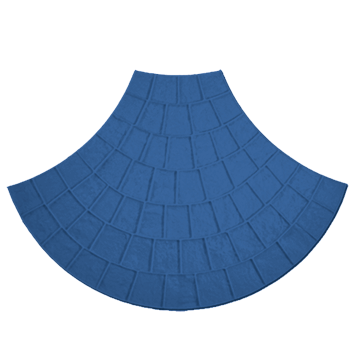
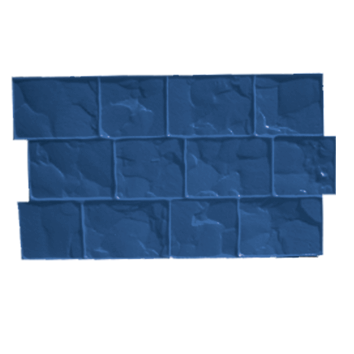
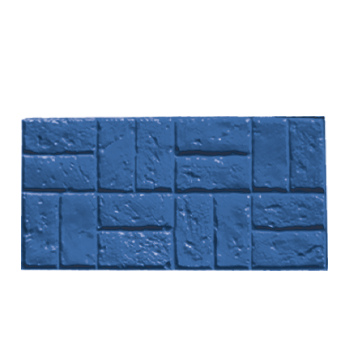
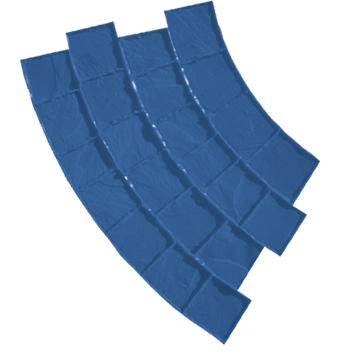
The decorative solutions offered by our more than 150 stamped concrete moulds are unlimited. A very complete range
in which some of the most outstanding shapes are: fan moulds, cobblestone moulds, tile moulds, road moulds, brick
moulds, slab moulds or stone moulds.
Stamped concrete moulds are constantly being created to offer increasingly creative patterns and designs.
Achieving finishes such as irregular stone, classic paving stones and even wood couldn't be easier than with IMACEM.
Get to know them all and let your imagination run wild.
See moulds
Stamped concrete colours
Stamped concrete is a continuous cladding in which all possible colours can be combined. From neutral colours
such as white, black, grey or beige, to more intense and daring shades such as red, green or blue.
Inorganic pigments are used to colour stamped concrete because they are resistant to alkalis, solar radiation
and weathering. These are climatic factors to which this building material is exposed. That is why it is so
important to have quality colours that avoid unpleasant surprises such as discolouration over time of the paving
or façade.
At Topciment we have created four different lines of stamped concrete colours. Pigments that give colour to the
mortar, transforming its appearance and that can be used outdoors without any worries. Arcocem, which is the name
of our family of pigment pastes, is highly resistant to the effects of sunlight and cleaning products.
With our dyes you can colour stamped concrete with full guarantees. White, grey, silver, black, brown, blue, green
or red are just some of the many stamped concrete colours we can offer you. In addition, many of our products have
their own colour chart.
See colours
Renovate multiple spaces with stamped concrete
Stamped concrete is an alternative to more traditional architectural materials. We are referring to wood,
terrazzo and ceramics. A decorative technique that is a more economical choice to make and also to maintain
over time.
A covering that makes it possible to play with reliefs and patterns and that is more suitable for outdoor
areas, especially floors in public areas. There are four types of stamped concrete, depending on the method
of application and the use to which it is to be put.
Outdoor stamped concrete floors: driveways, pavements, parks,
terraces, gardens, patios, shopping centres, car parks, entrances to residential areas, etc.
Indoor stamped concrete floors: although they are less common,
in recent years their use has increased in homes, sports centres, restaurants, hotels and commercial premises.
Stamped concrete in swimming pools: the resistance to humidity
of stamped concrete, its non-slip character and a unique decorative touch make it one of the most recommended
materials for covering the swimming pool environment. This is why stamped concrete in swimming pools is so popular.
Vertical stamped concrete: we can find it on facades, walls and walls
of residential houses and heritage buildings such as museums, etc. The aesthetic contrast of vertical stamped
concrete is spectacular. Its execution process differs slightly from the paving system.
STAMPED FLOORING
Create dream spaces with stamped paving. Opt for this decorative technique and innovate in
communal areas and residential homes. Renew parks, gardens, squares, terraces, shopping centres,
car parks and much more.
View gallery
VERTICAL STAMPED CONCRETE
Who said that stamped concrete is only for floors? Renovate vertical surfaces of private
homes and businesses, facades and even historic buildings such as museums. Achieve the most
unique final finishes with vertical printed concrete.
View gallery
STAMPED
CONCRETE POOLS
Few decorative solutions are as outstanding for renovating the pool deck as stamped concrete.
Not only because of the wide variety of designs and textures available, but also because of the
possibility of waterproof and non-slip finishes that stamped concrete for swimming pools offers.
View gallery
How to apply stamped concrete
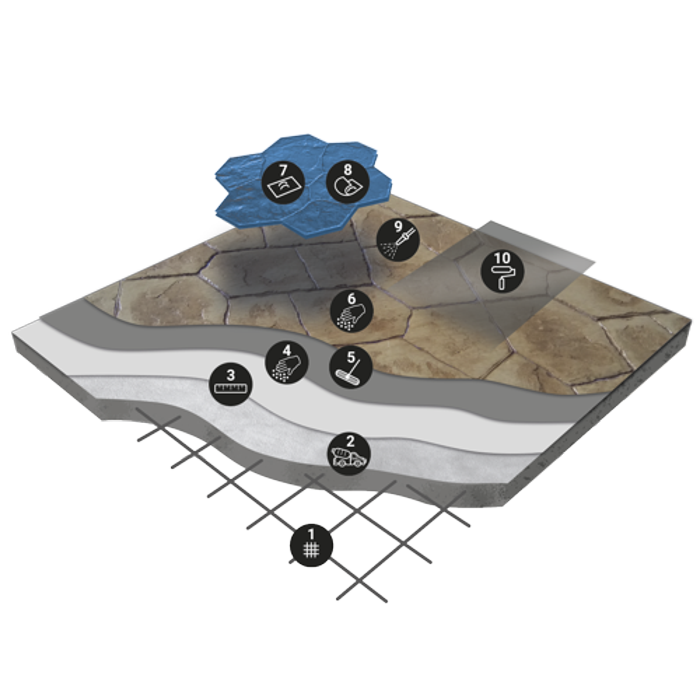
1. Prepare the surface
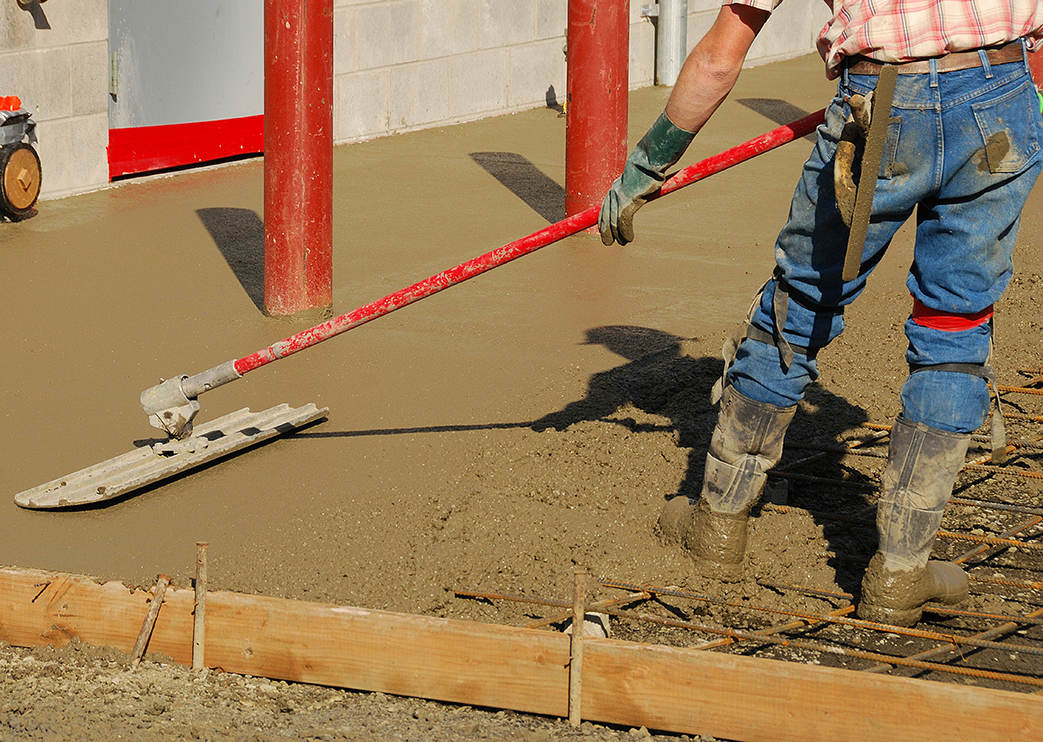
2. Pour the concrete
3. Smoothing, levelling and trowelling
4. Sprinkle colour hardener
5. Trowel
6. Apply the release agent
7. Prime the printed mould
8. Remove the release agent
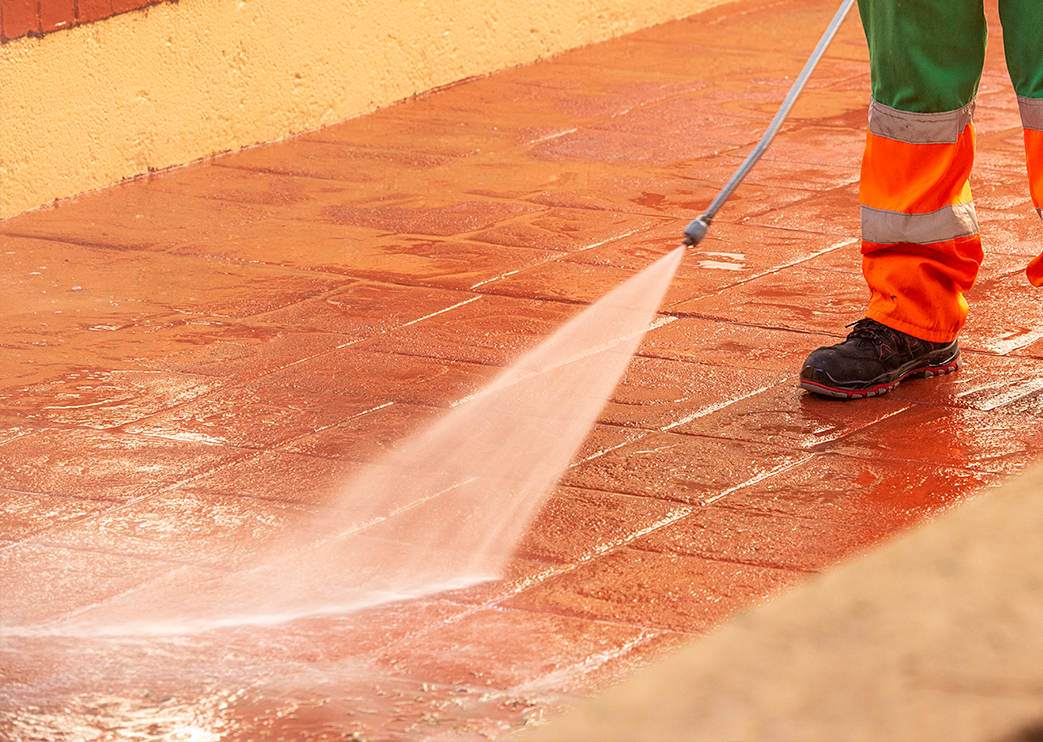
9. Clean the surface
10. Apply the varnish
Continue
Frequently asked questions about stamped concrete
In addition to being an aesthetically pleasing building material, stamped concrete is characterised
by its versatility.
Stamped concrete is mainly used on floors. Some of the most common stamped concrete floors can be found
on roads, pavements, shopping centres, parks, squares, gardens, outdoor car parks, patios or entrances
to residential areas.
But there are also printed concrete floors in the interiors of large halls and areas such as sports
centres, commercial premises or restaurants. Not to mention stamped concrete for swimming pools, one
of the most common types of stamped concrete applications.
Although not as well known, this decorative solution can also be applied on facades, walls and interior
and exterior walls. This is commonly referred to as vertical printed concrete.
The application of stamped concrete varies depending on the surface to be coated. The application
of both interior and exterior stamped paving is carried out in a certain way, while the application
of vertical stamped concrete is carried out in a different way.
On This page we explain
the step by step of each one of them.
The high durability of stamped concrete makes it one of the preferred materials for
covering all types of paving. If the installation has been carried out with full guarantees and
the use and maintenance are correct, the durability of a stamped concrete pavement can reach more
than two decades.
It is no coincidence that more and more people are opting for stamped concrete in swimming pools because
of its anti-slip properties. It is one of the most advisable options for covering both the edge of the
pool and the surrounding area to prevent falls. Provided, of course, that a varnish is used to give it
this finish.
In addition, it is aesthetically more attractive as stamped paving is capable of imitating stone or wood,
among other noble materials.
Waterproofing is one of the particularities of stamped concrete paving, so it can be
applied in areas exposed to rain, as it does not allow water to pass through, thus avoiding filtrations
and derived problems. This is one of the reasons why stamped concrete swimming pools are on the rise.
However, it is very important to apply a varnish to give it this property.
The price of stamped concrete depends on many factors. From the quality of the materials used or the
moulds, to the colours chosen, the labour and the complexity of the work to be carried out. But also
on the final textures and finishes. Thus, the price per square metre of stamped concrete varies greatly
depending on these elements.
Resistance and durability are two characteristics shared by stamped concrete and polished concrete.
Both are ideal for high-traffic surfaces due to their high strength and resistance to extreme temperature
changes. Depending on the use, the surface to be covered and the particular needs of each person, it is
more advisable to use one type of concrete or another. These are the main differences between stamped
paving and polished paving:
-
In stamped paving, moulds are used to stamp different patterns and textures on the surface, so the
surface layer of the stamped concrete contains the shapes that have been applied with these moulds.
In contrast, the surface layer of polished concrete is completely smooth and continuous as no moulds
are used.
-
The thickness of the polished concrete layer is slightly thicker than that of stamped concrete.
-
Polished concrete is a material in great demand for interior surfaces, especially in private homes. On
the other hand, we find stamped concrete pavements both in exteriors and interiors and even vertical
stamped concrete on walls, facades or walls.
-
The finishing techniques are totally different. While stamped paving has an embossed and textured finish,
polished concrete offers a much smoother and untextured finish as it does not require moulds.
Although it is not the norm, because the use of stamped concrete is more widespread on exterior surfaces,
it can also be used without problems in interiors in two ways. The first one, as paving; and the second
one on facades, walls or walls.
If you get tired of stamped concrete over time, you can remove it without any problems. The most
practical way is to use the existing surface as concrete paving and put whatever you want on top of
it. For example, you can lay paving stones, stoneware, earthenware, tiles or microcement, among others.
Another way to remove the stamped concrete, although a little rougher and mainly used on large construction
sites, is to destroy the surface with a hammer, compressor or perforator.
The duration of a stamped concrete installation depends on many factors: the square metres to be covered,
the finishes to be achieved, the surface on which the stamped concrete is to be poured or the degree of
inclination of the surface, as it needs to be levelled. Taking all these elements into account, the
installation of a stamped concrete floor can take approximately one week.
Stamped concrete does not require extensive cleaning, although it depends on the degree of soiling of the paving
or vertical facing. In principle, it is sufficient to clean the surface every 3 months. We recommend using our
Ecoclean Pro
cleaning agent. Then rinse with pressurised water.
The maintenance of stamped concrete does not require much complexity, as it is a very resistant type
of coating whose durability can even exceed 20 years. In the event that over time the stamped paving
has lost some colour or the cement begins to show, it is advisable to apply a resin mixed with the
pigment of the floor.
Although this is the most commonly used option, as specialists we recommend applying Covercem® Stone.
An aesthetic and very natural-looking renovation mortar that is ideal for renovating concrete that has
lost its former colour or some of its hardness. It also offers greater strength than applying a resin alone.
Cracks or fissures in stamped concrete can occur for a variety of reasons. From an excessive load on
the floor, an incorrectly placed steel mesh or the absence of it, to a deficient compaction of the
ground before concreting, among others.
Here is a step-by-step guide to repairing a crack or fissure in stamped concrete:
impreso:
-
Thoroughly clean the area of the pavement or vertical facing that needs to be repaired, with
special emphasis on the inside of the crack or fissure. If necessary, vacuum up any dust that
may have been stored inside the crack or fissure.
-
Generously fill the crack or fissure with a concrete repair putty. This can be flexible (acrylic
or polyurethane putty) or cementitious. If necessary, open the crack wide to allow the repair
product to enter.
-
The time has come to renew the surface finish of the stamped concrete. To do this, apply Covercem®
Stone or Covercem® Monocrom in the colour of your choice.
-
In the case of using Covercem® Monochrom, the surface must first be stripped with our Ecoclean Stripper.
Afterwards, the floor must be cleaned with pressurised water.
-
When the Covercem® is completely dry, apply Sealcem® WT or Sealcem® DSV sealers depending on the
desired gloss or finish.
Although stamped concrete is a highly resistant decorative continuous paving, with the passage of time
a loss of colour or shine can occur in its finishes due to erosion, rain, sun or misuse.
A problem that has an easy solution. Here we explain how to recover the colour or shine of stamped
concrete:
-
Clean the area of the stamped concrete to be renovated thoroughly. To do this, we recommend the
use of Ecoclean Pro detergent cleaner, following the instructions given above.
-
Once the floor or wall is completely dry, apply Sealcem WT T or Sealcem DSV sealers depending on
the desired gloss or finish. At least two coats of the chosen sealer should be applied. In the
specific case of Sealcem® WT varnish, it can be pigmented with our range of Arcocem® colourants.
The last step in the decorative technique of stamped concrete is the application of a varnish. This
is an essential product that will not only protect the new coating from impacts and weather conditions,
but will also prolong its good appearance.
A varnish that, on some occasions, enhances the colour of the paving or vertical facing while increasing
its resistance. As a general rule, this resin is applied every two or three years. The purpose is none
other than to recover the shine lost over the years and to reinforce the resistance.
At Topciment we have developed a line of specific varnishes called Sealcem®. On this page we explain how to varnish stamped
concrete, step by step.
As stamped concrete is a textured/textured surface, to remove the sealer or varnish from the surface,
it is necessary to strip it. To do this, use our product Ecoclean Stripper. The steps to follow are:
-
First of all, the stamped concrete coating must be stripped in order to leave it in the best
possible condition. With a roller or brush, apply our Ecoclean Stripper gel stripper until
the surface is well covered.
-
When the surface is perfectly stripped, it should be completely covered with plastic for 1 hour.
This period must be guaranteed to prevent the stripper from drying out and to allow it to act in
depth.
-
Once the plastic has been removed, the surface shall be cleaned with pressurised water.
-
After checking that the stamped concrete is dry, it is time to seal the surface again with our
Sealcem® WT or Sealcem® DSV varnishes or our Covercem® range of products.
Misuse of stamped concrete can lead to significant deterioration over time. In the event that it
requires considerable repair, here is the protocol for action:
Clean the area to be repaired thoroughly. It is recommended to use the detergent cleaner Ecoclean
Pro or Ecoclean Construction. Depending on the degree and type of dirt, use one or the other. Leave
the specialised cleaner to act for 5 to 15 minutes. Then brush with a bristle brush and rinse with
pressurised water.
When the surface is completely dry, it is time to repair the stamped concrete. We recommend Covercem®
Stone mortar in the chosen colour. Apply two coats, allowing 4 to 8 hours drying time between coats,
covering the surface well. Allow to dry between 24 and 48 hours after applying the second coat.
If a finer finish is required, Covercem® Monocrom or Covercem® Restaura mineral consolidants should be
applied to repair the damaged printed concrete. Beforehand, the floor should be stripped with our Ecoclean
Stripper. After cleaning the surface with water, proceed to coat the surface with two coats of Covercem®.
Let dry 2 hours between coats, 24 hours after the second coat and just before applying the sealer.
Once the Covercem® Stone, Covercem® Monochrom or Covercem® Restaura is dry, apply Sealcem® WT or Sealcem®
DSV sealers depending on the desired gloss or finish.
If, in addition to repairing the stamped concrete, the aim is to make the coating water-repellent, apply
two coats of Covercem® Xtrem. Allow to dry for 4 to 8 hours between coats. Then polish. This mineral consolidant,
ideal for polishing, will improve the protection of the surface against water and atmospheric agents.
In the case of a deteriorated and discoloured printed concrete covering, painting it may be the best
solution to make it look as good as the first day. It is very important to assess the damage in order
to find the right treatment.
If for example the stamped paving or wall has only discoloured or you want to change the colour for
whatever reason, we recommend two methods for painting stamped concrete. Either use our Sealcem® DSV
Colour paint or our Arcocem® pigments and pigment pastes.
If, however, in addition to the loss of colour, the surface suffers from major damage and therefore
requires repair, the method would be very different. In this particular case, the Covercem® family should
be used. These are mineral consolidating coatings that not only repair the damage to the stamped concrete
floor or façade, but also give it colour to restore the vigour of the original stamped concrete.